
The Improbable Ones
On the people we meet, the chances we take, and the lives that change as a result
You have had this feeling too: you meet someone briefly, and only years later realise that was the turn you did not know you were waiting for.
We become who we are through the choices we make, the places we go, and the communities we build. The people we meet are not accidents. They are often the result of those choices.
Looking back, many of the most important relationships in life seem improbable. A chance conversation. An unexpected introduction. A missed train. A new job. A dance class. A volunteer project. At the time, they feel random. Years later, they feel inevitable.
I have been fortunate to work in worlds where the improbable encounter is almost a professional hazard. Community building, citizen diplomacy - the art of ordinary people building trust across borders, no title required - logistics at a global scale. These are environments where the unexpected introduction is less an exception and more a feature of the landscape. And over the decades, I have come to believe something quite firmly about it.
A Career That Took an Unexpected Turn

For much of my working life, I have been associated with DHL - a company that, at its best, is a remarkable expression of what a truly global organisation can look like. Connecting people, goods, and ideas across borders. Operating in places most companies would find too complex, too unpredictable, or too far from the centre of things.
Logistics at a global scale teaches you things that no classroom easily can. How to operate across cultures without imposing your own. How to read a room in a language you do not speak. How to build trust quickly with people whose reference points are entirely different from yours.
I did not plan to become a community builder or a diplomat. I planned to deliver things on time. But the two turned out to have more in common than I expected.
The Ones That Got Away
Before I go further, I need to say something honest: I have also missed them.
I have walked past people I should have spoken to. Assumed someone had nothing to teach me. The ones that got away are harder to write about - but they taught me more than the ones I caught.
I remember being on a business trip to Kuala Lumpur, Malaysia, wandering through a shopping mall near my hotel. As I entered the building, I had the strangest feeling that there was somebody there I was meant to meet. I ignored it. Carried on through those gleaming halls, distracted by the noise of the place.
The feeling came again. I could not explain it. And then, a few minutes later, I sensed an energy close to me - and as I turned around, there was a gentleman walking towards me. He apparently had the same feeling. We had never met. We did not know each other. We chatted for a few minutes, exchanged numbers.
Neither of us ever followed up.
How crazy is that? Who knows what that encounter might have delivered, had either of us been paying the kind of attention we owed it? The universe sometimes conspires in the strangest of ways - gives you signals that are not obvious, moments that do not arrive with instructions. And often we are not prepared for how to respond.
That story does not have a tidy ending. But it is the truest thing I can tell you about the cost of staying closed.
The Assignment Nobody Quite Expects
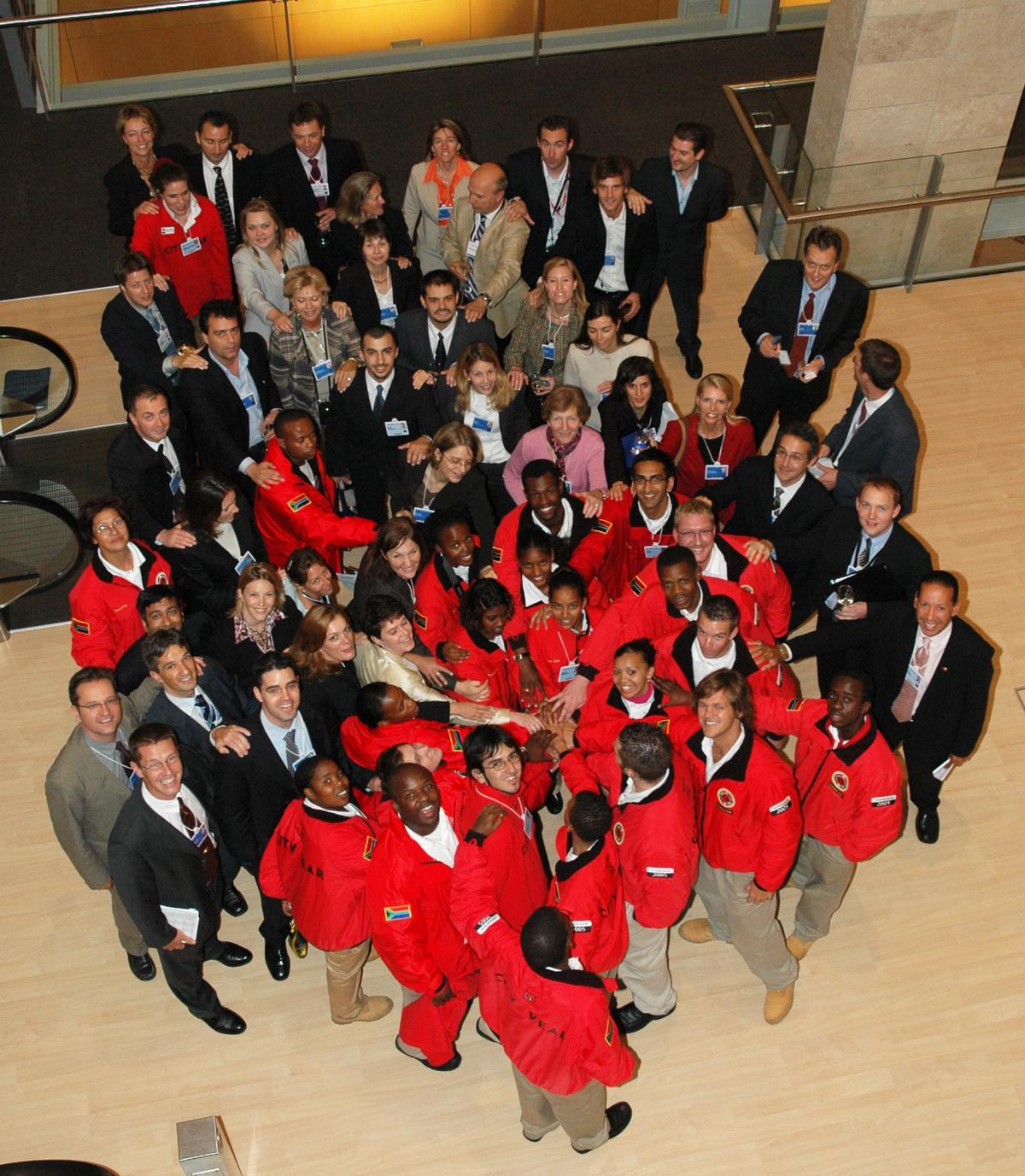
At some point in the early 2000s, I found myself assigned to a team at the World Economic Forum in Geneva, Switzerland, supporting the Global Health Initiative. I want to be careful about how I describe this, because the honest version is more instructive than the impressive version.
I did not seek this out. I was not selected because I was the most qualified person in the room for a global health initiative. I was there because of a chain of choices and circumstances that, at each individual step, seemed entirely unremarkable. A conversation here. An assignment there. Someone who knew someone. The ordinary machinery of professional life, working in its usual invisible way.
José María Figueres
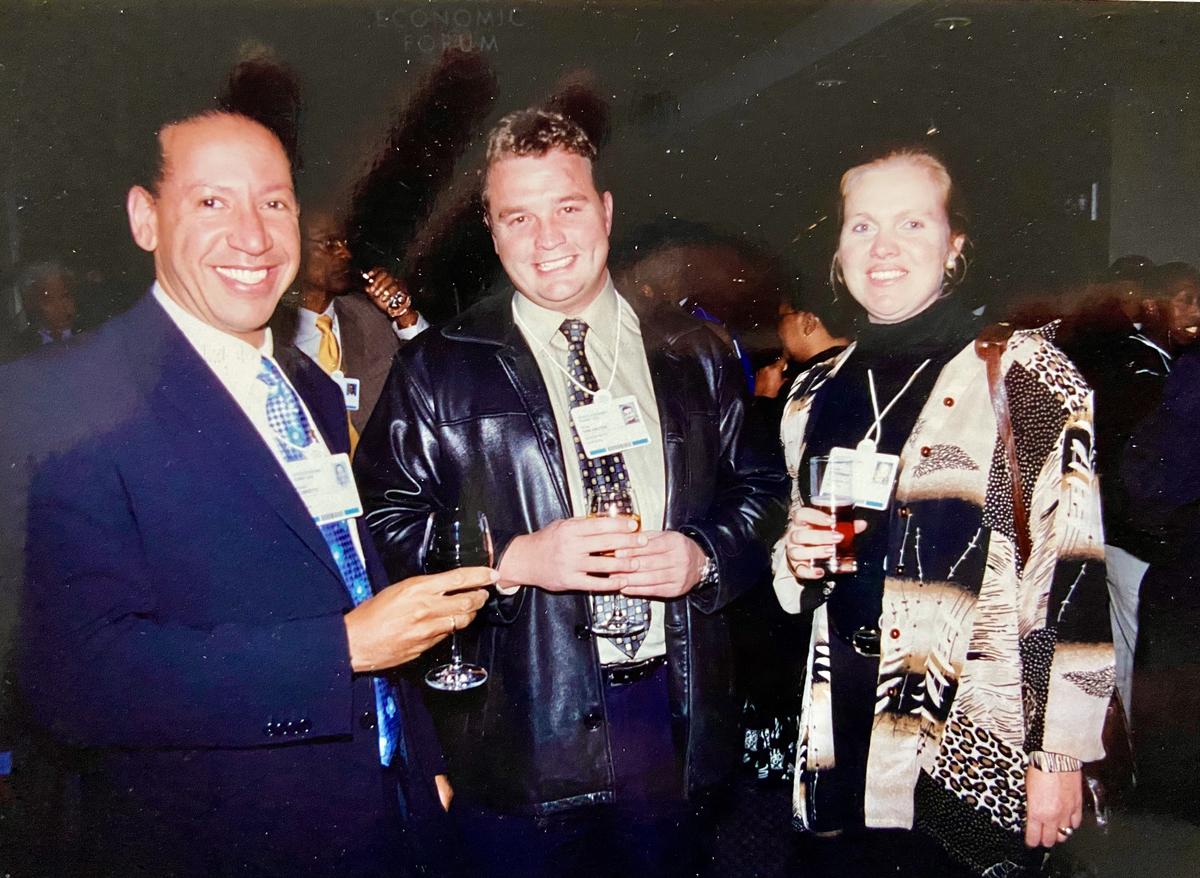
The project was headed by José María Figueres - former President of Costa Rica, elected at 39 as one of the youngest heads of state in Latin American history, and at the time Managing Director of the World Economic Forum, where he would later become its first Chief Executive.
Figueres was one of those rare people who carry authority without wielding it as a weapon. Immensely skilled in the art of diplomacy - the kind that is less about protocol and more about the genuine ability to make different people feel that their perspective matters, and then to find the thread connecting all of them toward something worth doing together.
He was also - and this matters more than any of the above - a genuinely good person to work with. Curious. Direct. Unhurried in the way that only people who have already held the highest offices tend to be. He had nothing left to prove, which gave him the freedom to be entirely present in the work itself.
Watching how he operated at the intersection of global business, government, and civil society was an education that no formal programme could have provided. You cannot read about that in a textbook. You have to be in the room.
José María Figueres Olsen
- President of Costa Rica, 1994-1998. Elected at 39, one of the youngest heads of state in Latin American history.
- Managing Director, World Economic Forum, 2000-2004. Later appointed as the WEF's first Chief Executive.
- Appointed by Secretary-General Kofi Annan in 1999 to lead the United Nations' first ICT Task Force.
The People in the Room
One of the things that working at that level of international engagement teaches you is that the world, for all its scale, has a strange intimacy at the top. The same names appear in different rooms. The same conversations continue across years and continents.
During that year on the Global Health Initiative, I found myself in the company of people I would never have encountered through the ordinary trajectory of a logistics career. Among them was Paulo Coelho - the Brazilian author whose work, most famously The Alchemist, has sold more than 150 million copies and been translated into 80 languages. A man whose entire body of work is, in one sense, an extended meditation on the very subject of this essay: the significance of the encounters we almost miss.
I don't know if the universe conspires. But I do know that it waits to see whether we are looking.
Meeting people like that - not as names on a page but as human beings working on something real - changes your sense of what is possible. It expands your frame of reference in ways that persist long after the project ends.
What a Year Like That Actually Does
I want to be honest about this, because the temptation in a piece like this is to make it sound grander than the experience felt at the time.
While it was happening, much of it felt like work. Long sessions. Complex stakeholder dynamics. The challenge of being one of the less senior people in a room full of very senior ones, and figuring out how to contribute meaningfully without overstating your role.
What changed was not visible in the moment. It was visible in the years that followed. A direct understanding of how leaders at the highest level actually think and operate - not the public version, but the working version. A network of relationships that opened doors I would not have known existed. A confidence in cross-cultural environments that comes only from sustained time inside them. An understanding that the most important work in the world is often done by people who do not look or sound like the version of power you were expecting.
Why This Connects to People to People International
I did not make the connection immediately. It took years of working with PTPI before I began to see that what Eisenhower understood in 1956 was precisely what I had experienced in those years at DHL and the World Economic Forum.
The most transformative human encounters are rarely the ones we plan. They are the ones that become possible because we have put ourselves somewhere, joined something, said yes to an assignment, walked through a door that was not obviously meant for us.
PTPI does not promise life-changing encounters. It would be dishonest to do so. What it does - what every chapter meeting, every exchange, every shared meal and conversation across borders does - is increase the surface area for the improbable to occur.
It creates the conditions. What happens inside them is up to the people involved.
A Note to Anyone Reading This
If you are working in community building, in diplomacy, in education, in any field that is fundamentally about connection across difference - please know that the encounters that will matter most to your life and your work are probably not the ones in your diary.
They are the ones that happen because you showed up somewhere. Because you stayed a little longer than you planned. Because you asked a question when it would have been easier to stay quiet. Because you said yes when the safer answer was no.
Four small things worth trying
- Stay 15 minutes longer than you planned.
- Ask one question you don't already know the answer to.
- Say "tell me more" instead of "that's interesting."
- Follow up with someone within 48 hours, even if you're not sure why.
José María Figueres did not change my career. The choice to remain open, curious, and genuinely present in a year that could easily have felt like an obligation - that is what changed it. He provided the context. I had to provide the attention.
That is a distinction worth carrying.
We become who we are through the choices we make, the places we go, and the communities we build. The people who matter are not accidents. But recognising them when they arrive - that part requires practice.
The improbable ones are out there. Your only job is to be in the room when they arrive - and to be paying attention.