
Gliwice
PTPI Chapter Gliwice, Poland
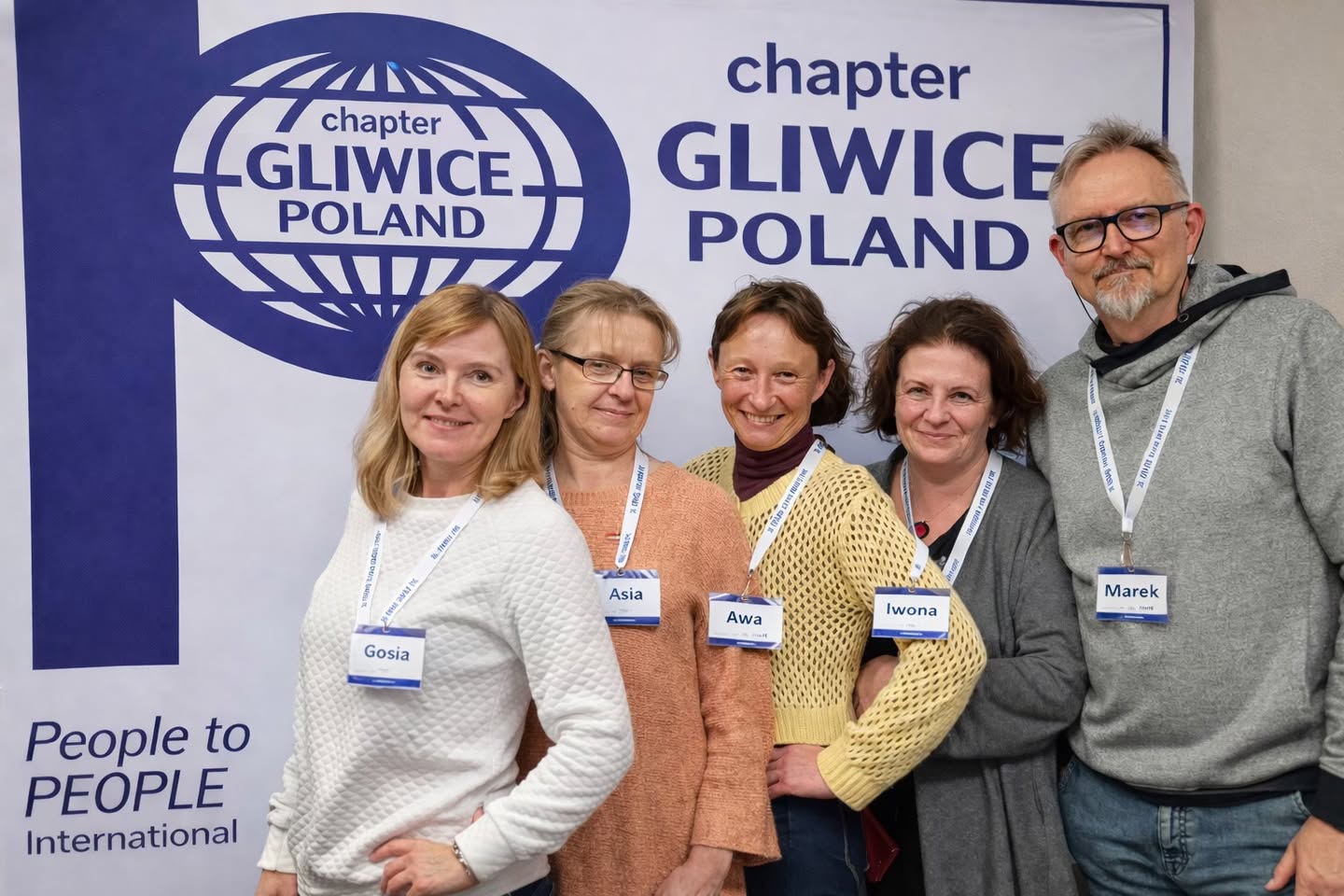
Leaders of the Gliwice Community Chapter
CONTACT
Marek Sadowski
E-mail: marsad73@gmail.com
Telephone: +48 511 919 888
About Gliwice
🇵🇱 PTPI Gliwice Chapter | Poland
📍 Gliwice, Poland
📧 Email: marsad73@gmail.com
📞 Telephone: +48 511 919 888
📮 Community Chapter, Poland
🗣️ Languages: Polish and English
Chapter Contact: Marek Sadowski
About the Chapter
The People to People International Gliwice Chapter is a fully operational Community Chapter bringing people together through friendship, cultural understanding and citizen diplomacy.
Led by Marek Sadowski, its local leadership team includes Awa Kubisz, Asia Jura, Gosia Diduszko and Iwona Zyman. These returning members were involved in the chapter during its original period of activity and now bring their experience, commitment and local knowledge to its renewed leadership.
The chapter is rebuilding connections within Gliwice while developing opportunities to engage with the wider PTPI network. It is particularly interested in meeting members from other communities and exploring future member-to-member visits and homestay connections.
Operating in Polish and English, the chapter offers a welcoming local point of connection for people who believe that stronger relationships across cultures can contribute to a more peaceful and understanding world.
Discover Gliwice 🇵🇱
🕊️ A City Shaped by Many Cultures
Gliwice is one of the oldest cities in Upper Silesia. Established under Magdeburg law before 1276, the city has developed under Polish, Czech and German influence. Its history reflects the changing borders, identities and communities that have shaped Upper Silesia over many centuries.
The medieval street pattern remains visible around the Market Square and City Hall, while museums and historic sites preserve the stories of the many communities that contributed to the city. The “Gliwice – City of Many Cultures” exhibition at the Piast Castle Museum explores this layered local identity.
📻 A Place of Global Historical Importance
Gliwice Radio Station is one of the city’s best-known landmarks. On 31 August 1939, Nazi German operatives staged a false attack on the station as part of an attempt to manufacture a pretext for the invasion of Poland. This event, known as the Gliwice provocation, remains a powerful reminder of the dangers of propaganda and manipulated information.
The surviving wooden broadcasting tower stands more than 111 metres high and is recognised as the tallest wooden broadcasting tower in the world. It is now preserved as a Polish Monument of History.
🏭 From Industrial Heritage to Innovation
Gliwice played an important role in the industrial development of Upper Silesia. In 1796, one of the first coke-fuelled blast furnaces in continental Europe began operating in the city. Engineering, metalworking and manufacturing became central to its growth.
Today, Gliwice combines this industrial heritage with education, research and new technology. The city is home to the Silesian University of Technology and has developed into an important academic, scientific and innovation centre.
🌿 Culture, Nature and Community
Gliwice offers a distinctive mixture of historic architecture, industrial heritage, green spaces and contemporary culture. The City Palm House contains thousands of tropical plants, while the atmospheric ruins of the Victoria Theatre provide a setting for concerts, exhibitions, performances and community events.
The Upper Silesian Jews House of Remembrance preserves the history of Jewish life in Gliwice and the wider region. Its work reminds visitors that understanding a community means recognising every part of its history.
A Taste of Poland and Upper Silesia
🥟 Food That Brings People Together
Food is an important expression of Polish hospitality. Across Poland, shared tables may include pierogi filled with cheese and potato, cabbage and mushrooms, meat, vegetables or fruit. Other familiar dishes include bigos, a slow-cooked dish of cabbage, sauerkraut, meat and spices, as well as warming soups, potato pancakes and traditional cakes.
Gliwice also shares the distinctive food culture of Upper Silesia. One of the region’s best-known meals is rolada śląska, a beef roulade traditionally served with kluski śląskie, soft Silesian potato dumplings, and modra kapusta, seasoned red cabbage.
These dishes speak to something central to PTPI’s work: food is never only food. It carries family memories, regional identity and traditions that can be shared across generations and borders.
🌍 A Natural Home for Citizen Diplomacy
Gliwice has experienced changing borders, industrial transformation and the meeting of different languages and cultures. Its history demonstrates why honest dialogue, human connection and respect for different identities matter.
The PTPI Gliwice Chapter carries this spirit forward by rebuilding relationships locally and connecting its community with people across the wider PTPI network.
🌏 People to People International
Peace through Understanding – rooted in community, strengthened by friendship and carried forward by citizens.
Discover Klina