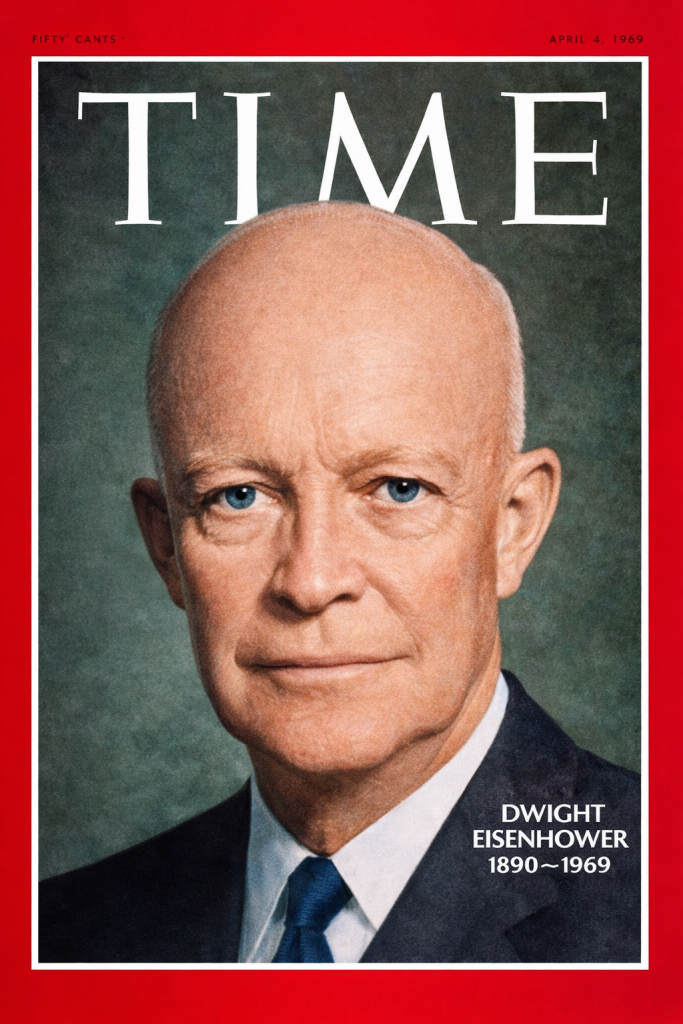
In a world that often feels divided, it is worth remembering that one of the most powerful ideas for peace began with something surprisingly simple: friendship.
In the years following the Second World War, President Dwight D. Eisenhower believed that lasting peace could not be secured by governments alone. Treaties and diplomacy mattered, of course. But something deeper was needed.
People needed to know each other.
In 1948 he expressed the idea clearly:
“If we can get people talking to each other, I am certain that most of the world’s troubles would be over.”
This belief eventually led to the creation of the People to People movement, formally launched at a White House conference in Washington, D.C. on 11 September 1956. The purpose was ambitious yet practical: to encourage ordinary citizens to build relationships across borders and cultures.
Eisenhower described the goal in simple terms. People around the world, he said, do not want war. They want peace. The challenge is helping people understand each other well enough to see that truth.
Citizen Diplomacy
The People to People movement was built on a powerful idea that remains relevant today: citizen diplomacy.
Eisenhower believed every traveler, student, teacher, businessperson, or artist carried a quiet responsibility when meeting people from another country.
Each individual, he said, represented their nation through their actions, their values, and their willingness to listen and learn.
In other words, diplomacy did not belong only to governments. It belonged to people.
An Epidemic of Friendship
In 1963 Eisenhower described the movement with a phrase that still resonates today. Writing in Reader’s Digest, he called it:
“An epidemic of friendship.”
He asked a simple question: if goodwill among people is so universal, why does misunderstanding continue to cause conflict?
His answer was equally simple. Ignorance breeds suspicion. When people do not know each other, fear fills the gap.
The solution, he believed, was direct contact between citizens.
“Men, women and children can join in a movement which I like to think of as an epidemic of friendship among the peoples of the world.”
Through exchanges, travel, dialogue and cultural sharing, barriers of geography, language, race and history could begin to fade.
Understanding alone would not create peace, Eisenhower acknowledged. But without understanding, peace would never be possible.
A Movement Beyond Government
From the beginning, People to People was designed to stand apart from government structures.
It was not intended to be propaganda. It was not a foreign aid program. It was a network of citizens working to build understanding through personal relationships.
In the early years, committees were formed across sectors of society. Educators, artists, business leaders, journalists, tourism professionals and community organizations all participated. Each group developed its own initiatives to encourage international contact.
Some programs focused on cultural exchange. Others improved how travelers represented their country abroad. Still others created partnerships between communities in different nations.
The goal was not one method, but thousands of methods.
A Global Idea
When the movement began in the 1950s, it was largely focused on Americans building relationships with people overseas. The world was emerging from war and entering the tensions of the Cold War. Personal contact between citizens was seen as a way to counter misunderstanding and propaganda.
Today the idea has evolved.
The spirit of People to People belongs to everyone.
Citizen diplomacy now means something broader: every individual, from every nation, has the opportunity to represent their country with dignity, curiosity and openness toward others.
In an interconnected world, that responsibility has never been more important.
The Passport to Peace
Late in his life Eisenhower reflected on what he hoped his legacy would be. Despite leading the Allied forces during World War II, he spoke about peace instead of war.
He said that if he were to be remembered for anything, he hoped it would be for contributing to efforts that helped bring peace to the world.
The People to People movement was one of those efforts.
Its central belief remains simple and powerful:
Understanding between people is the passport to peace.
At People to People International today, that belief continues to guide our work. Every exchange, every dialogue, every connection between communities helps strengthen the idea that friendship across borders is not just possible.
It is essential.