HATE-LESS: Turning Kindness into Informed Action
People to People International, Tallinn, Estonia is helping young people and youth workers challenge hate speech, disinformation and harmful narratives about migration.
Kindness can sound like a gentle response to a hard problem.
It is not. Kindness asks us to recognise the dignity of another person, to question information that may have been designed to divide us, and to speak responsibly at the moment when fear is doing the talking. It takes skill, and it takes some nerve.
Kindness is also, word for word, the first stated objective of HATE-LESS, a European project that sets out to combat hate speech and disinformation through media literacy, critical thinking and participatory storytelling. Our chapter in Tallinn is one of its five partners.
The Gap Between What People Believe and What Is True
Ask people across Europe how many of their neighbours came from outside the European Union, and most will guess too high.
In the 2022 Eurobarometer survey on the integration of migrants, 68 per cent of respondents overestimated the share of migrants in their country. On average, people put the figure at around 16 per cent of the population. The actual share was under 7 per cent.
Perception: Eurobarometer on the integration of migrants, 2022. Actual: Eurostat, 2024, recording 29 million non-EU citizens resident in the European Union. Both figures as reported by the European Commission, Directorate-General for Migration and Home Affairs, September 2025. Poland and Sweden do not count refugees from Ukraine in these statistics.
A person who believes their country is one sixth foreign born is not lying. They are working from a picture they were given.
That is how this material usually arrives. Not as open hostility, but as a plausible number, a cropped video, a story about someone who is never named and never asked. People with different histories, identities and reasons for moving are reduced to a label. Their own voices leave the conversation first.
What HATE-LESS Is
HATE-LESS is an Erasmus+ Cooperation Partnership in the field of youth. It sets out to dismantle hate speech, disinformation and entrenched racist narratives by making diverse counter-narratives visible, in particular the testimonies of young people who have met the person they were told to fear.
November 2024 to May 2027
400,000 euros
Five, in five countries
Seven
Erasmus+, via JUGEND fuer Europa
2024-1-DE04-KA220-YOU-000244181
Five organisations deliver the project:

The project names four objectives: kindness, digitalisation, inspiration and inclusion. In practice these mean countering fake news through media literacy, embedding media and digital literacy in youth work, mobilising youth workers and organisations through participatory methods, and strengthening the civic competences that make mutual respect possible.
This is not about replacing one form of persuasion with another, and it is not about telling young people what to conclude. It is about the skills to pause, check a source, notice when a feeling is being engineered, listen to people whose experience is routinely described by others, and choose carefully what to pass on.
What Tallinn Brings
People to People International, Tallinn, Estonia is not a new arrival to this work. Eesti People to People was registered as a non-governmental organisation in Estonia in 1997 and has been active since 1993 as a chapter of People to People International. It engages more than 100 volunteers and works with young people, educators, decision makers and communities with fewer opportunities.
Its experience runs across Erasmus+, Europe for Citizens and Interreg. Its stated areas of expertise are media and digital literacy, active citizenship, inclusion, gender equality and European values. It is a member of the Estonian Round Table for Development Cooperation, and a member of the European Youth4Media Network, which coordinates HATE-LESS.
That last detail is worth pausing on. Chapters often ask how European projects begin. In this case the answer is membership of a European network, sustained over time, which is how an invitation to join a consortium becomes possible in the first place.
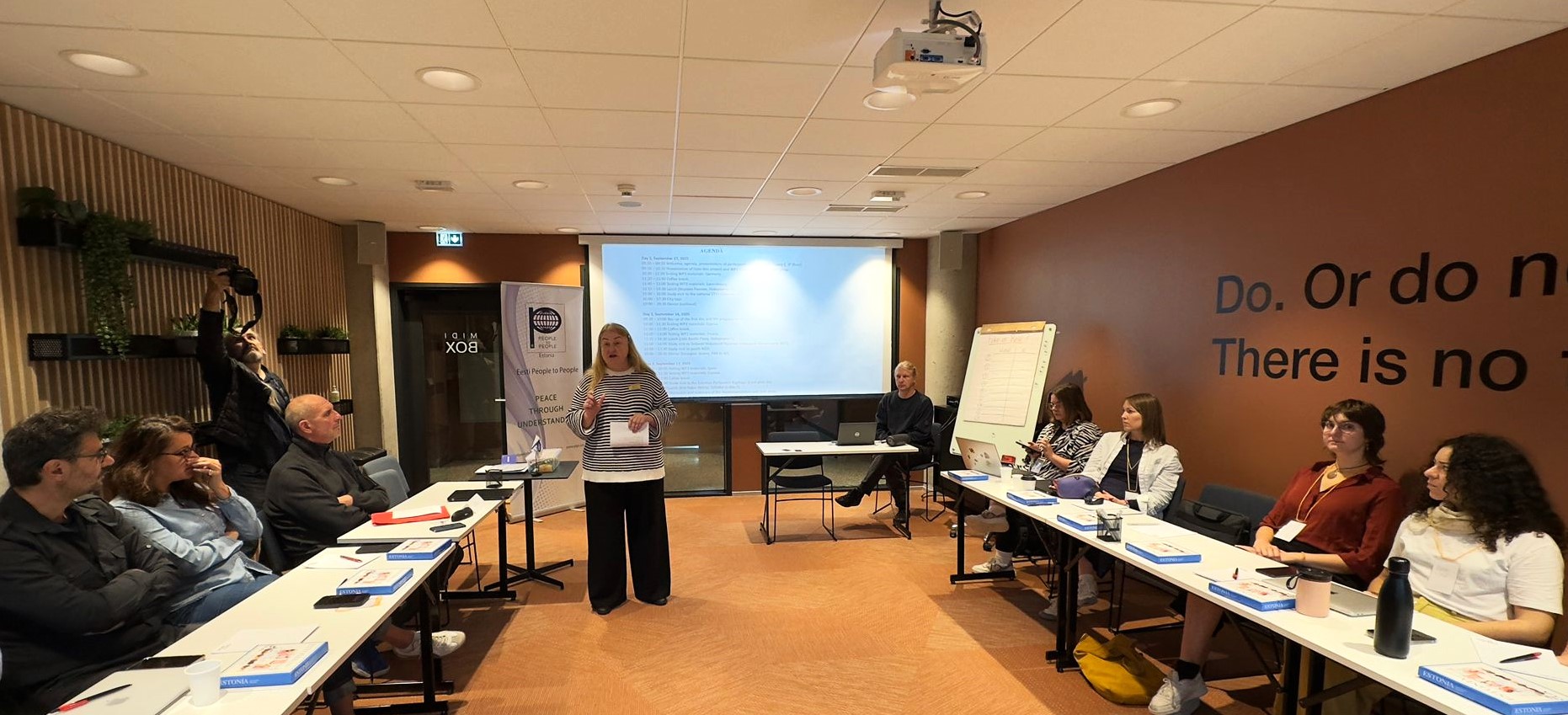
Tallinn hosted the international Training of Trainers from 15 to 17 September 2025, where 23 participants tested the HATE-LESS toolkit before publication. The toolkit is published in Estonian alongside six other languages.
What Exists, and Where to Find It
Projects are easy to announce and harder to evidence. HATE-LESS has published its outputs openly. Everything below can be downloaded free of charge from the HATE-LESS results page.
-
Methodological Guidelines for Participatory ActionsA framework for youth-led storytelling and counter-narratives, built on Participatory Action Research, which positions young people as co-creators rather than as an audience.
-
Toolkit for Youth Workers and TrainersSix thematic modules combining theory and practical activity, with exercises on media literacy, digital manipulation and online hate. Published in English, Estonian, French, German, Greek, Spanish and Ukrainian.
-
Repository of Participatory Impact Monitoring ToolsFifteen tools for evaluating whether the training changed anything, combining qualitative and quantitative methods.
-
Train the Trainer handouts, Spain editionTwelve downloadable handouts covering a four-session programme, each session with a facilitator learning path, an energiser and a main activity.
-
Project flyer and launch press releaseShort introductions to the project for sharing with partners, schools and local media.
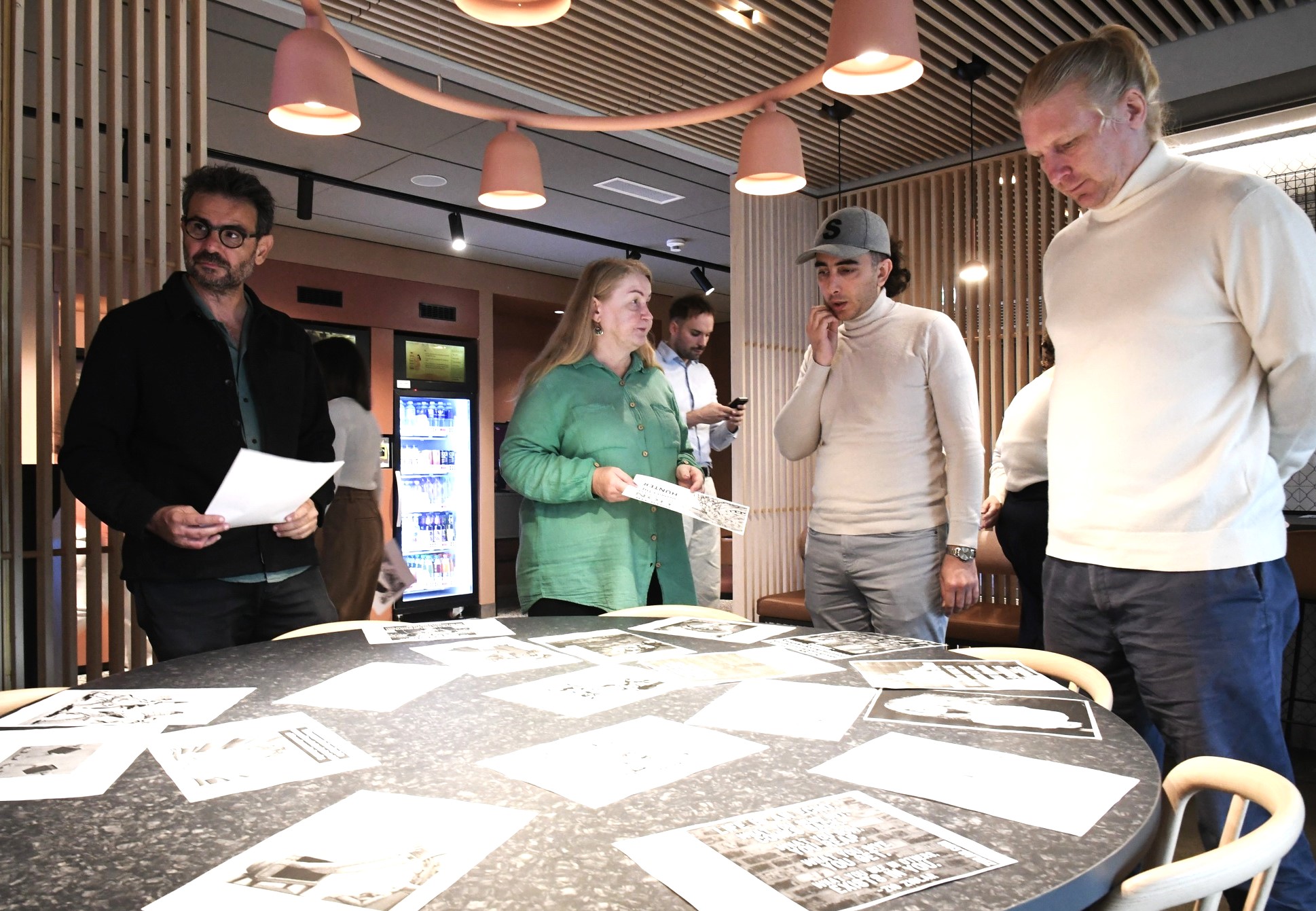
The four training sessions move in sequence: Storytelling Through Space, Voices from the Margins, Emotional Narratives and Media Influence, and Creating Counter-Narrative Videos. They can be delivered as a progressive programme or used individually, which matters for chapters that have one evening rather than four. The materials deal directly with consent, privacy and respectful representation, which is what separates participatory storytelling from extraction.
The Method, and Why It Holds Up
The training uses simple, memorable frameworks rather than theory. CARE, standing for curiosity, attention, reflection and empower, structures interview-based storytelling. LOVE, standing for look, open, voice and empower, guides participants to name a harmful pattern without repeating the hateful language, acknowledge its emotional effect, offer a truthful alternative and propose an action.
One energiser is worth describing. It asks participants to picture a hummingbird carrying single drops of water towards a forest fire, then to practise three steps: notice, choose water, create. It is a modest image, deliberately so. Nobody in the room is asked to end racism. They are asked to add water rather than fuel.
None of this is sentiment dressed as pedagogy. The problem it addresses has been measured. Analysing about 126,000 stories shared on Twitter between 2006 and 2017, Vosoughi, Roy and Aral reported in Science in 2018 that false news travelled significantly farther, faster, deeper and more broadly than the truth in every category they examined. They also found that humans, not automated accounts, were largely responsible.
If falsehood moves faster, correcting it afterwards is a losing race. Getting there first works better.
That is the logic of what researchers call inoculation, or prebunking: warning people in advance about a manipulation technique and exposing them to a weakened example, so they recognise it at full strength. A 2010 meta-analysis by Banas and Rains established inoculation as an effective resistance strategy. In 2022, Roozenbeek and colleagues reported in Science Advances that short prebunking videos improved the ability of viewers to identify manipulation techniques, including in a field experiment run on YouTube.
The second half of the method is older, and it is PTPI territory. Gordon Allport argued in 1954 that contact between groups reduces prejudice under the right conditions. Pettigrew and Tropp tested that claim in 2006 across more than 500 studies and found that intergroup contact typically does reduce prejudice.
HATE-LESS puts the two together. Teach a young person to recognise the technique, then put them in front of the person the technique was aimed at, and give them a camera.
Citizen Diplomacy in a Digital World
In 1956, Dwight D. Eisenhower founded People to People International on a straightforward proposition: if ordinary citizens from different countries meet one another, they will find it harder to fear one another, and harder still to be led into conflict.
Seventy years later, a great deal of that meeting happens on a screen, mediated by systems that reward the reaction over the reflection. Eisenhower could not have anticipated the mechanism. He would have recognised the problem exactly.
This is what citizen diplomacy looks like when it is brought up to date and made teachable. Kindness on its own corrects nothing. Supported by evidence, media literacy and a little courage, it decides how those tools get used, and whether the response protects the dignity of the people being talked about.
What This Says About Our Chapters
There is a wider point, and it is worth stating plainly. A PTPI chapter is not only a place where local activities happen. Tallinn sits in a 400,000 euro European partnership alongside a media network of 52 organisations, a research consultancy and two established education foundations, and holds its own.
That has three consequences for the network. Chapters can access funding that the Global Coordination Centre cannot reach on their behalf. Chapters can produce knowledge that transfers, which is what a toolkit in seven languages is. And chapters can contribute to public discussion on questions that matter, rather than only responding to them.
None of this requires a large budget of your own. It requires a chapter willing to be a partner rather than a beneficiary, and patient enough to build the relationships that make an invitation possible.
Three Things Your Chapter Can Do
HATE-LESS runs until May 2027, so the materials are current and the partnership is active.
- Download the toolkit. It is free, open access, and available in seven languages at hate-less.eu/results. No permission is required.
- Run one session. The Train the Trainer handouts are designed to be used individually. One evening, one facilitator, one short video made by young people in your community.
- Tell us what happened. Write to office@ptpi.network and ptpest@hot.ee. We would like to feature the results in a future issue, and we would like to know what did not work as much as what did.
Learn More
- The HATE-LESS project
- Project resources and downloads
- The HATE-LESS consortium
- People to People International, Tallinn, Estonia
- Eesti People to People on Facebook
Project 2024-1-DE04-KA220-YOU-000244181. Co-financed by the European Union. The opinions and points of view expressed are solely those of the author or authors and do not necessarily reflect those of the European Union or of JUGEND fuer Europa (German National Agency for Erasmus+ Youth, Erasmus+ Sport and the European Solidarity Corps). Neither the European Union nor the Granting Authority can be held responsible for them.