The Long Road to Peace
Why so many organisations are working for peace – and why it is still taking so long
Right now, parliaments are debating how fast to rearm. People are protesting in the streets of cities across Europe and beyond, angry at governments that simultaneously claim poverty while pledging billions more for weapons. The rhetoric of threat and counter-threat dominates every news cycle.
And yet, quietly and persistently – in offices, classrooms, community halls, conflict zones, and across borders – thousands of organisations continue to do the other work. The work of building trust. The work that does not make headlines. The work of peace.
This piece asks two questions that matter deeply to us at PTPI. First: what are organisations like ours actually doing to contribute to a more peaceful world? Second – and more uncomfortably – if so many people and organisations are working for peace, why is it taking so long?
The answers are not simple. But they are important. And they are urgent.
First: What Do We Mean by Peace?
Not everyone means the same thing. Before we ask why peace is taking so long, we should be honest about what kind of peace we are talking about.
Negative Peace
The absence of direct violence – no war, no armed conflict. The minimum threshold. Necessary but not sufficient.
Positive Peace
The presence of justice, equity, inclusion, and reconciliation. The conditions that make conflict unlikely to return. This is PTPI's territory.
Structural Peace
Systems and institutions that protect rights, distribute power fairly, and resolve disputes without violence. The long-term architecture of a peaceful world.
At PTPI, our work lives primarily in the second and third columns. We are not a ceasefire broker. We are a relationship builder. The cross-cultural connections we create – between neighbours who have never met across a border, between young people from nations whose governments regard each other with suspicion, between communities that have been taught to fear one another – these are the foundations of positive and structural peace.
That is why our work takes time. And that is why it matters.
The Numbers That Should Shock Us
(EUR 2.5 trillion)
(EUR 46 billion)
(EUR 5.1 billion)
These numbers are not abstractions. They represent a choice that the world makes, year after year, about what it values. As ICRC President Mirjana Spoljaric said when announcing a 17% budget cut for 2026: "As defence budgets surge, states must also put more effort and resources into preventing conflicts, defending the rules of war and providing humanitarian relief."
We are, as a global community, spending approximately 54 dollars on the means of war for every one dollar we spend on the means of peace. That ratio is not a mistake. It is a policy. And we can choose to change it.
Who Is Doing the Work
The peace ecosystem is large, diverse, and often invisible. Here is a look at some of the most important actors – what they are doing, and the pressures they face in 2026.
People to People International (PTPI) – Citizen Diplomacy Since 1956
Founded by President Eisenhower on 11 September 1956 with a deceptively simple idea – that ordinary citizens, connecting directly across cultures, can do what governments alone cannot – PTPI operated in more than 160 countries before the pandemic significantly contracted that reach. We are now rebuilding actively, with chapters present in approximately 50 countries and growing. Our model is built on the belief that peace is not a treaty. It is a relationship. And relationships require investment, time, and genuine encounter.
In 2026, PTPI's 70th anniversary year, that work continues across every continent. In Armenia, young people are running Books for Every Village, placing literacy at the heart of rural peace-building, targeting over 10,000 children. In Kenya, Franklin Okello leads an Adopt a Plant and Tree Project connecting approximately 5,000 learners to environmental stewardship as a foundation for community resilience. In Korea, 34 adult chapters and 37 student chapters sustain one of the world's most active citizen diplomacy networks. In Estonia, chapters are addressing disinformation and digital literacy through Erasmus-funded programmes that treat information integrity as a peace issue.
In Japan, Ruriko Nakajima and six active chapters continue meaningful exchange work – including PTPI Denmark's return visit to Japan this year, renewing bonds built over decades. In Kosovo, Blinera Gashi and the Klina Youth Chapter show that even in post-conflict societies, young people can lead. In Togo, partnerships with Dominique Adabi and Africa of Hope are building youth mobility pathways.
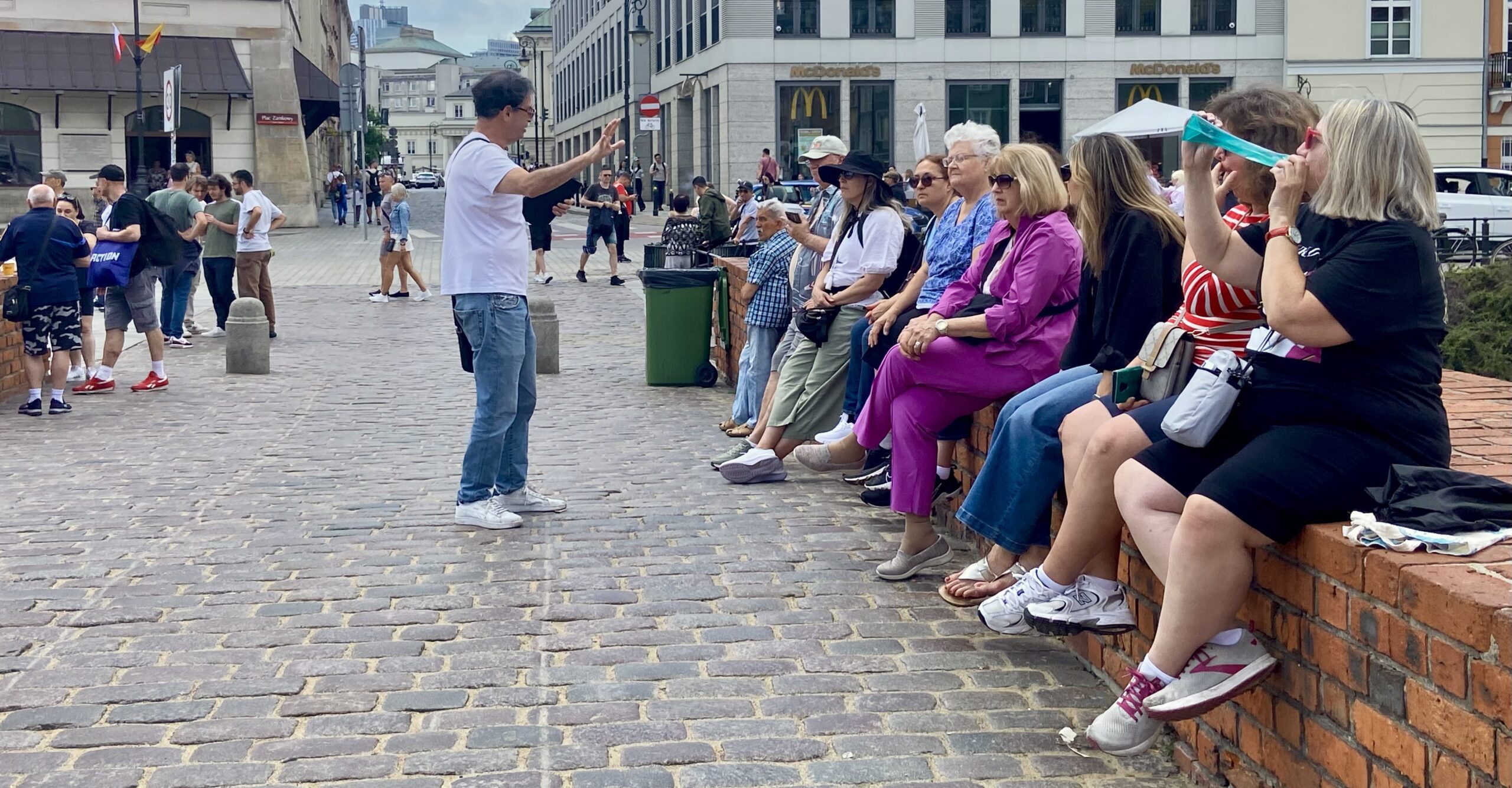
Across North America, the Greater Phoenix Chapter recently travelled to Lithuania and Poland, exploring communities shaped by both trauma and extraordinary resilience. Members from North Carolina are visiting colleagues in Berlin, deepening ties across the Atlantic. The All Swiss Chapter will welcome international visitors this autumn in a gathering that models exactly what citizen diplomacy looks like in practice. The chapters in Kansas City, Delaware, and Tainan remain among our most consistently active – hosting meetings, welcoming guests, and sustaining the human infrastructure of peace one gathering at a time.
PTPI's greatest strength is also its greatest challenge: we work at the speed of human trust. That is slower than a missile. It is also more durable than any ceasefire.
The Human Proof: What Connection Actually Does
In 2024, a PTPI chapter exchange brought together young professionals from Vilnius, Lithuania and Kansas City, Missouri. They had little in common on paper – different languages, different histories, different political contexts. One participant, a 24-year-old Lithuanian named Marta, later wrote:
"I had spent years watching American news and thinking I understood America. Then I sat with someone from Kansas City for three days. We disagreed about almost everything. But by the end I knew she was not my enemy. That sounds simple. It is not simple at all."
Her Kansas City counterpart, James, said he had never spoken to anyone whose grandparents had lived under Soviet occupation. "It changed what I thought I knew about resilience," he said. Both are now mentoring younger participants in their home chapters.
This is not a policy outcome. It cannot be measured in a quarterly report. It is, however, exactly how peace gets built – and exactly why PTPI has been doing this for 70 years.
The United Nations – The Indispensable, Imperfect Institution
The UN remains the only truly universal forum for peace and security. Its peacekeeping operations currently deploy in over a dozen active conflict zones. Its Secretary-General's Peacebuilding Fund is the world's leading investment instrument for conflict prevention. Its specialised agencies – UNESCO, UNICEF, UNDP, UNHCR – address the root conditions that make conflict more likely: poverty, displacement, illiteracy, exclusion.
In 2025-2026, the UN published its Peace Watchlist, identifying five critical moments for global action, including the expanded role of women in peace processes. Globally, women now occupy 44% of positions in bodies linked to international law, compared with 32.5% in 2015. In Colombia, women peace negotiators helped end a decades-long civil war and are now defining transitional justice.
But the UN is under severe strain. US funding cuts have forced sweeping staff reductions. UN peacekeeping operations have been forced to reduce activities by around 25% due to member states failing to pay assessed contributions in full and on time. A shortfall of over $2 billion (EUR 1.85 billion) had accumulated by mid-2025.
The International Committee of the Red Cross (ICRC) – Humanity in the Hardest Places
The ICRC operates where almost no one else can or will. Its mandate is to protect life and dignity in armed conflict – visiting prisoners, tracing missing persons, delivering aid under fire, and promoting respect for international humanitarian law. In 2026, it is present in the most critical conflict zones in the world: Sudan, Gaza, Ukraine, and the Democratic Republic of Congo.
The ICRC's Humanitarian Outlook 2026 draws on work in more than 100 armed conflicts to identify four converging trends: the erosion of respect for the rules of war, the targeting of civilian infrastructure, the politicisation of humanitarian action, and the fragmentation of multilateral cooperation. The ICRC is also leading a Global Initiative culminating in a landmark conference, "Humanity in War," towards the end of 2026.
Medecins Sans Frontieres (MSF) – Bearing Witness Where It Hurts
MSF's contribution to peace is not always framed as such – but it is real. By maintaining presence in conflict zones that governments and militaries have effectively abandoned, MSF asserts the principle that human life matters regardless of politics. That assertion is itself a form of peace work. In May 2026, the heads of ICRC, WHO, and MSF issued a joint call for action after a decade of attacks on healthcare facilities in conflict zones – hospitals bombed, ambulances obstructed, medical staff killed.
Faith-Based Peacebuilders – The Often-Forgotten Network
Any honest map of the global peace ecosystem must include faith communities. Organisations like Sant'Egidio – whose quiet mediation helped end the Mozambique civil war in 1992 – the Quakers' long tradition of conciliation, and the growing network of interfaith councils operating in post-conflict communities represent a form of persistent, values-grounded peace work that pre-dates and will outlast any government programme. These organisations lead with presence, with listening, and with the long-term commitment to communities that formal diplomacy cannot sustain.
Global Forums and Think Tanks – The Architecture of Ideas
Organisations like the World Economic Forum, the Munich Security Conference, Chatham House, and the International Crisis Group shape the narratives that inform how decision-makers understand conflict and peace. Chatham House's June 2025 report on why peacebuilding fails is especially sobering: conflicts are increasing in complexity and number – up by almost three-quarters since the 2000s. Too often, political pressure to "be seen to do something" generates short-term interventions that fail to address the conditions sustaining conflict.
Civil Society and Citizen Peacebuilders – The Hidden Infrastructure
Hundreds of thousands of civil society organisations work daily on the preconditions for peace: gender equality, education, dialogue, reconciliation, youth empowerment, environmental justice. The hollowing out of USAID – which between 2017 and 2022 alone supported over 388,000 women in leadership, conflict mediation, legal, political, and peacebuilding processes – represents a catastrophic loss. US humanitarian aid fell from $14.1 billion (EUR 13 billion) in 2024 to $6.4 billion (EUR 5.9 billion) in 2025, with further cuts projected.
It is also worth noting that many states in the Global South – including China, India, Brazil, and South Africa – have significant capacity and moral standing to invest in peace infrastructure. A genuinely plural peace ecosystem requires the active participation of all regions, not only those with a Western diplomatic tradition.
So Why Is It Taking So Long?
The organisations above, and thousands more, represent an extraordinary collective commitment to a better world. Their people are dedicated. Much of their work is effective. Lives are saved. Communities are protected. Trust is built. So why does peace feel so far away? We think there are six honest answers.
- Peace does not have a visible product. A fighter jet has a specification, a delivery date, and a photograph. A generation of young people who understand and respect one another across cultural difference has no price tag and no ribbon-cutting. Political systems reward what can be measured in the short term, and punish what cannot.
- Conflict is profitable in ways that peace is not. Arms industries generate revenue. Reconstruction contracts generate revenue. The peace dividend is diffuse, shared, and long-term. The conflict premium is concentrated, immediate, and politically powerful.
- The multilateral system is being deliberately weakened. The UN peacekeeping budget stands at less than 0.3% of global military spending – and even that is being cut because powerful states are withholding their contributions. This is not inadvertent. It is strategic.
- Aggression is not being addressed at its source. Weapons deter attacks. They do not dissolve the conditions that make attack seem rational to an aggressor – grievance, impunity, domestic political need, dehumanisation of the other. Those conditions require diplomatic, cultural, educational, and economic responses.
- Peace organisations are fragmented. The peace ecosystem is vast but often incoherent. Organisations work in parallel, compete for funding, duplicate effort, and rarely build the kind of durable network that would allow systemic change. The arms industry does not have this problem.
- Trust takes time that politics cannot afford. Building genuine cross-cultural understanding takes years, sometimes generations. Political cycles run on 4-5 year horizons. There is a deep structural mismatch between the timescale of the problem and the timescale of the political will available to address it.
A Word of Honest Self-Reflection
The feedback that shaped this piece asked us to be honest – not just about the world, but about our own sector and about PTPI specifically. That is a fair ask, and we accept it.
We know that citizen diplomacy exchanges can sometimes remain elite activities – connecting those with the means to travel, the language skills to communicate, and the institutional access to participate. Broadening that to include voices from rural communities, from post-conflict regions, from the economic margins, remains an active priority and an active challenge.
We also know that measuring impact is hard. We can count exchanges and participants. Measuring whether those encounters actually reduce prejudice or contribute to conflict prevention over time requires longitudinal research that is difficult to fund and even harder to attribute. We are committed to improving our measurement of impact – and equally committed to not pretending that what cannot yet be measured is not happening.
"Peaceful relations between nations requires understanding and mutual respect between individuals."– President Dwight D. Eisenhower, Founder of People to People International, 1956
What Needs to Change
We are not pessimists. We have been doing this work for 70 years, and we know that connection, education, and encounter change people. But the current trajectory is not leading towards peace. What needs to change is not just policy. It is priority.
- Invest in prevention, not just response. The ICRC notes that OCHA's entire $29 billion (EUR 26.7 billion) humanitarian appeal represents only about 1% of what the world spent on defence in 2024. Redirecting even a fraction towards education, dialogue, and cross-cultural exchange would be transformative.
- Defend the multilateral system. The UN, for all its imperfections, is the only institution with the global mandate to facilitate peace. Withholding contributions is not reform. It is sabotage.
- Recognise citizen diplomacy as a strategic asset. Organisations like PTPI do what governments structurally cannot – we build the human relationships from which political trust can grow.
- Expand the narrative of security. Real security includes access to education, healthcare, clean water, economic opportunity, and cultural dignity. These are the conditions without which no amount of military spending will produce lasting peace.
- Treat climate change as the conflict driver it is. By 2026, it is no longer possible to write seriously about conflict prevention without acknowledging the role of resource scarcity, displacement, and climate-driven instability in fuelling the next generation of wars.
- Invest in the next generation now. The children growing up through the conflicts of this decade will either become peacemakers or conflict perpetuators. Which they become depends largely on the stories they are told, the encounters they have, and the values they are given.
What Peace Could Look Like in 2030 – and What It Would Cost
Diagnosis without direction is not enough. Here is what a meaningfully more peaceful world in 2030 could look like – and what it would take to get there. These are achievable targets with political will and redirected resources.
| What peace could look like in 2030 | Where we are now | Estimated cost | What it requires |
|---|---|---|---|
| PTPI active in 80+ countries with funded programming | ~50 countries, rebuilding post-pandemic | ~$4M / EUR 3.7M annually | Increased chapter grants and donor partnerships |
| UN peacekeeping budget at 1% of global military spending | 0.27% of military spending | $27B / EUR 25B | Political will from 50+ states |
| Measurable hate speech reduction in 3 test regions | Baseline only; no targets set | $500M / EUR 460M | Education ministry partnerships and tech sector |
| Cross-border youth exchange: 500,000 participants annually | ~150,000 p.a. (estimated) | $2B / EUR 1.8B | EU, AU, ASEAN programme integration |
| Every conflict zone has a civilian dialogue track | Fewer than 30% currently do | Modest – political will is the constraint | UN reform and regional body engagement |
None of this is out of reach. All of it requires a choice. The cost of building peace in 2030 is a fraction of the cost of managing the conflicts we will otherwise inherit.
Three Things You Can Do Today
What difference does your involvement actually make? Here are three specific, concrete answers.
Connect with a Chapter
Find your nearest PTPI chapter and attend one event. Meet one person from a different culture. This is the mechanism. Visit ptpi.network/chapters
Contact Your Representative
Write to your elected representative asking for increased funding for conflict prevention and cultural diplomacy in the next budget cycle. One letter carries more weight than you think.
Join Our AGM
Thursday, 11 September 2026, on Zoom. Hear from chapter leaders worldwide. Register at office@ptpi.network
A Closing Word
2026 is our 70th anniversary year. We were founded in a world emerging from devastating global war, by a president who had commanded the forces that ended it – and who understood, perhaps better than most, that military victory is not the same as peace.
Eisenhower's insight was radical in its simplicity: if people know each other, they are less likely to kill each other. If they have eaten at the same table, laughed at the same jokes, puzzled over the same problems, and recognised something of themselves in a stranger – the psychological distance required to treat that person as an enemy becomes much harder to maintain.
In a world mediated increasingly by algorithms designed to amplify division, the act of genuine human encounter is itself a form of resistance.
So yes, peace is taking a long time. It has always taken a long time. The question is not whether the work is worth doing. The question is whether we will do enough of it, with enough conviction, for long enough, to make the difference the world needs.
We believe we can. We believe we must. And we believe that – person by person, community by community, understanding by understanding – we already are.
Advancing Peace Through Understanding – through every conversation, every collaboration, every connection.